Fragrance encapsulation is the technology that makes a scent linger: fragrance oils are sealed inside millions of microscopic capsules, each surrounded by a protective outer shell, which then break open on cue—typically through friction, skin contact, or warmth—to release their scent gradually over time. Where a traditional perfume's volatile ingredients evaporate quickly after application, encapsulated fragrances hold their payload in reserve and release it only when triggered, which is why the technique has become central to fabric softeners, laundry detergents, fine fragrances, and a widening range of personal care products.
What is Fragrance Encapsulation?
At its core, encapsulation is a delivery strategy. Perfumers have long fought a basic physical problem: the volatile compounds that give a fragrance its character are precisely the ones most prone to escaping into the air. Conventional formulation techniques, such as fixatives that anchor and amplify scent on the skin, address this by slowing evaporation within the perfume itself. Encapsulation takes a more radical approach, described in a review of fragrance formulation techniques as placing fragrance molecules "within microscopic spheres or capsules, allowing them to release gradually over time, prolonging the scent life of the perfume."
The fragrance developer Givaudan, which markets encapsulation systems for consumer products, describes the mechanism plainly: the capsules protect fragrance oils by surrounding them with an outer shell. A single fabric softener, the company notes, may contain millions of these microscopic spheres. That shell is the essential innovation—it converts a fleeting liquid ingredient into a stable, dormant particle that survives storage, product formulation, and application intact until the moment it is meant to perform.
A scientific review of flavour and fragrance encapsulation published in the PMC library frames the technology's purpose in terms of efficacy: microencapsulation is of "relevant interest" because of the need to improve the performance of a wide range of cosmetic and personal care products, from perfumes to hand and body wash and toothpaste. The same review notes that even products labelled "unscented" may contain encapsulated or otherwise delivered fragrances to mask the unpleasant smell of other ingredients—evidence that the technology's role extends well beyond perceptible scent.
The Science of Sustained Release: How Encapsulation Works
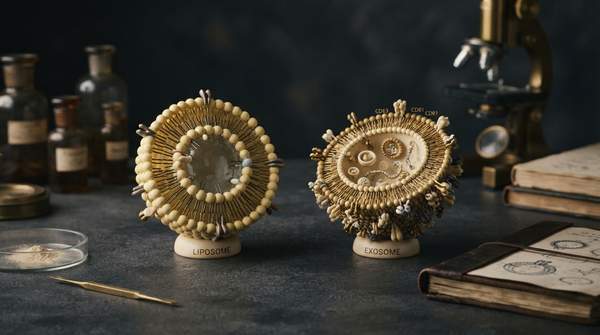
The mechanism unfolds in three stages. First, the fragrance oil is enclosed within a protective shell, isolating the volatile ingredients from the surrounding product and environment. Second, the resulting capsules are suspended in a finished product—a fabric softener, a body lotion, a fine fragrance—where they remain inert and intact. Third, an external trigger ruptures or opens the shell, releasing the scent at a chosen moment rather than all at once.
The trigger depends on the application. A research paper on microencapsulation techniques explains that in laundry detergents and fabric conditioners, polymeric microcapsules deliver long-lasting fragrance retention on fabrics through mechanically triggered release: the friction of wearing, handling, or moving the fabric breaks the shells and emits bursts of scent over hours or days. Cyclodextrin-based systems, by contrast, are commonly used in deodorants and skincare for odour control and fragrance stabilization, and nanoencapsulation techniques are increasingly explored in fine fragrances to enhance deposition and prolong scent longevity on skin.
Industry guidance on microencapsulation technology maps the same triggers to product categories: body lotions, shampoos, and skincare release their encapsulated fragrance through skin contact and warmth, while laundry detergents, fabric softeners, and dryer sheets keep clothes fresh for days through friction-triggered release. The result is a scent experience that is not merely stronger but structurally different—a sequence of small releases rather than a single evaporative peak.