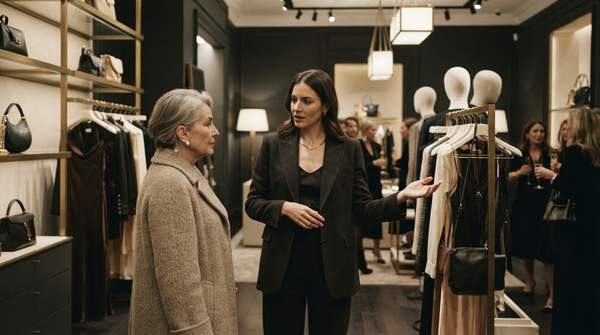
Luxury fashion pop-up stores have transformed from temporary curiosities into powerful strategic formats within high-end retail. These immersive, temporary environments offer a unique blend of urgency, novelty, and the thrill of discovery that permanent flagship stores often cannot replicate, as T-ROC observes. Today, pop-ups are no longer mere experiments but sophisticated strategic tools. They are employed by fashion brands to launch new collections, test potential markets, align with significant cultural moments, and strengthen overall omnichannel performance, according to Storefront. Taxonomy of Luxury Pop-Up Objectives
Luxury fashion pop-ups are conceived with distinct strategic marketing objectives, which can be broadly categorized into sales-orientation, innovation, and brand-orientation. Each category encompasses specific pop-up types tailored to achieve particular goals, according to research published in *Marketing Review St. Gallen*. This structured approach provides a framework for managers to align their temporary retail initiatives with their brand's overarching strategy.
The three primary strategic objectives are:
- Sales-Orientation: These pop-ups primarily focus on direct revenue generation and increasing turnover. For luxury brands, this might involve seasonal pushes, clearing specific inventory, or reaching new customer segments for immediate conversion. Examples include "Outlet Pop-up Stores" and "Retail Pop-up Stores," which are designed to drive immediate sales.
- Innovation: Pop-ups under this objective are strategically designed for market testing and the introduction of new concepts or products. This approach allows luxury brands to gauge consumer interest, test new cities, or launch collections without the long-term commitment of a permanent lease, as Storefront highlights. "Market Testing Pop-up Stores" and "Start-Up Pop-up Stores" fall into this category, enabling brands to gather valuable performance data and consumer feedback.
- Brand-Orientation: This objective centers on brand building, enhancing brand image, and creating immersive experiences that resonate deeply with consumers. For luxury fashion, where texture, movement, color, and atmosphere are paramount and cannot be fully conveyed through a screen, pop-ups offer a vital physical connection, Storefront explains. "Brand Interaction Pop-up Stores" and "Brand Experience Pop-up Stores" are examples, focusing on generating buzz, fostering personalized and interactive customer engagement, and securing press and influencer visibility to strengthen brand perception.
Operational Excellence in Luxury Pop-Up Execution
Successful luxury pop-up execution demands meticulous attention to several operational considerations. These ensure the temporary space not only aligns with the brand's exclusive image but also delivers an exceptional and memorable customer experience.
Key operational aspects include:
- Location Selection: The choice of location is paramount, significantly influencing target audience reach and overall brand perception, as the U.S. Chamber of Commerce emphasizes. Critical factors include foot traffic, rental costs, and proximity to the target customer. Fashion brands often find demand concentrated in major global cities like Paris, London, Milan, and New York, making short-term spaces in these high-profile areas particularly valuable for flexibility without long-term lease commitments, Storefront notes. The location also dictates the cultural context, which staff must be briefed on to engage effectively with clientele, T-ROC advises.
- Store Design and Buildout: The design of a luxury pop-up must create an immersive, memorable brand experience that authentically reflects the brand's aesthetic and values. Luxury brands frequently leverage unique themes or collaborations to craft exclusive environments, as observed by Storefront and T-ROC. To ensure efficiency and maintain brand consistency across different activations, T-ROC suggests investing in repeatable pop-up design systems that can be adapted to various locations and cultural contexts without requiring a complete redesign each time.
- Staffing: Luxury pop-ups require highly trained personnel to deliver exceptional customer service and embody the brand's values. Staff should be thoroughly briefed on the cultural context of the location, including local dining recommendations, nearby galleries, and neighborhood history, to engage in informed conversations that build genuine rapport, T-ROC explains. This approach fosters a relationship with the customer, moving beyond a mere transaction. Building a bench of trained luxury brand ambassadors who can activate on short notice is also essential. Furthermore, brands should consider how staff compensation aligns with the pop-up's business objectives, especially when sales are not the primary goal, according to a chapter on pop-up retail strategies from Toronto Metropolitan University Library.
- Marketing and Promotion: Effective marketing is vital to generate buzz and drive traffic to a pop-up store, both before and during its operation. Social media marketing initiatives are a key factor for pop-up retail success, allowing brands to showcase new products and engage with fans and customers, the Toronto Metropolitan University Library chapter highlights. Platforms like Twitter and Instagram provide excellent avenues to reach target audiences and drive conversation in relevant spaces. Accompanying communications are crucial for enhancing brand image and customer engagement.
- Permits and Financials: Pop-up shops may require various permits, including temporary business licenses, vendor permits, and zoning permits, along with insurance to protect the temporary location, as noted by the U.S. Chamber of Commerce. Budgeting for these fees is essential. While detailed financial modeling is complex, understanding the financial model behind luxury pop-up stores is crucial for brands considering this format, T-ROC emphasizes. A luxury pop-up in a premium location typically costs between $150,000 and $750,000 for a four-to-six-week activation. This comprehensive cost covers venue rental, custom design and buildout, staffing, logistics, marketing, and teardown, though costs can vary significantly based on the city, venue type, and the level of custom fabrication involved, T-ROC reports.
Measuring Success and Optimal Duration
The success of a luxury pop-up store is measured not solely by immediate sales, but by how effectively it achieves its primary strategic objectives. The optimal duration of a pop-up is directly influenced by these objectives.
Pop-ups can generate significant buzz, collect valuable market data, drive online traffic, and enhance brand image, according to Storefront and T-ROC. For instance, physical activations often lead to increased online traffic, social engagement, and repeat purchases. Customers who interact with a brand in person tend to exhibit stronger brand recall and higher lifetime value, Storefront explains. Developing measurement frameworks that capture the full value of these experiential activations, extending beyond just register receipts, is crucial, T-ROC advises.
The ideal duration depends on the brand's primary objective, T-ROC notes. If the goal is to generate buzz and media coverage, a shorter duration is often more effective. Pop-ups for collection launches or Fashion Week activations, for example, may last under two weeks, Storefront suggests. Conversely, if the objective is market testing and customer acquisition, a longer duration provides more actionable data. T-ROC indicates that a four-to-six-week activation is common for luxury pop-ups in premium locations, allowing sufficient time to gather performance insights.
Conclusion: Integrating Pop-Ups into Brand Strategy
Luxury fashion pop-up stores are powerful strategic tools when integrated thoughtfully into a brand's overall marketing and retail strategy. By clearly defining strategic objectives—whether sales-oriented, innovation-focused, or brand-building—and aligning them with specific pop-up types, brands can optimize their temporary retail initiatives. Operational excellence in location, design, staffing, and marketing ensures that the pop-up experience upholds the brand's luxury standards and delivers an exceptional customer journey. Finally, connecting these objectives to measurable benefits and understanding how they dictate optimal duration allows brands to accurately assess success and maximize the long-term value derived from these immersive, temporary engagements. This structured approach enables luxury fashion brands to leverage pop-ups not as fleeting trends, but as integral components of their strategic growth and brand evolution.