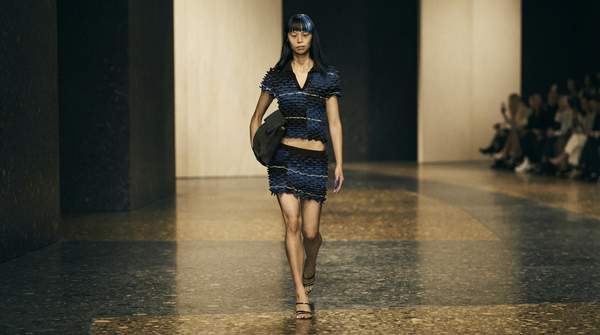
Producing a runway show that genuinely includes blind and visually impaired participants comes down to two commitments: a philosophy of authentic representation, and specific technical adaptations—above all, live audio description for the audience. Recent events from Alexandria to New York demonstrate that both are achievable. The Garden of Glam show in Alexandria introduced professional live narration so blind and low-vision guests could follow every garment and movement, while New York Fashion Week has hosted a show exclusively featuring blind models. The strategies below are drawn from what those organizers and models have actually said and done, and they can be adapted by any producer planning an inclusive event.
The Philosophy of Inclusive Fashion: Beyond Inspiration
The strongest inclusive shows are not charity spectacles. Their organizers describe them as corrections to an industry that has historically excluded disabled people. The Horizon Usher Foundation, producer of the DÉFILEZ-VOIR event, lists explicit goals: raising awareness about blindness and retinal diseases, promoting an inclusive and empowered image of disability, challenging traditional fashion norms, and inspiring new standards for accessible cultural events. The foundation also aims to raise funds for scientific research on Usher syndrome and retinitis pigmentosa—connecting the runway directly to the conditions many of its participants live with.
Models articulate the same mission in personal terms. At the Blind Fashion Show held during New York Fashion Week—which its producers describe as the first show there to exclusively feature blind models—participant Katia Hadjeb, who hails from Algeria, said, "This fashion show is not just to show the creativity of the designer, but also to advocate for blind people's rights." Fellow model Brilynn Rakes put it more bluntly: "I would love to break all of the stereotypes that surround modeling."
Awareness of specific conditions is itself a stated motivation. April Lufriu, a former Mrs. America and Mrs. World, and her daughter Savannah both have retinitis pigmentosa and modeled in the New York show; their hope is that the event helps bring global awareness to the disease. At the end of that show, each model had the opportunity to share more about their visual impairment with audience members—a structure that turns the runway into a platform for advocacy as much as display.
That framing matters for producers. At Alexandria's Garden of Glam, organized by Angela Harris's IMperfeKtlymade Foundation, one participant rejected the inspirational angle entirely: "We are just average people like everybody else. We are out there just showing who we are." The Beautiful Lives Project, whose recent Oak Brook show featured exclusively blind and visually impaired models, extends the same principle to the medium itself. Its blind co-founder, Bryce Weiler, said, "I wanted to show that fashion can be experienced in many ways. It can be seen through someone's eyes, or it can be touched through someone's fingers, or felt in the heart."
Inclusive Runway Show Planning Checklist
The table below consolidates the approaches documented across these events into a planning tool, organized by the three areas a producer must address: the show's messaging, the model's experience, and the audience's access. Each row pairs an action with the documented example that supports it.
| Planning area | Action to take | Documented example |
|---|---|---|
| Show philosophy & messaging | Frame the show as authentic representation, not inspiration; state a mission that challenges industry norms. | DÉFILEZ-VOIR's stated goals of challenging fashion norms and promoting an empowered image of disability; Garden of Glam participants describing themselves as "average people." |
| Show philosophy & messaging | Give the event a clear advocacy purpose participants can rally behind. | The New York show positioned as the first at NYFW to exclusively feature blind models, with models citing rights advocacy as their motivation. |
| Show philosophy & messaging | Tie the event to awareness of specific conditions where relevant. | April and Savannah Lufriu's hope that the New York show brings global awareness to retinitis pigmentosa; DÉFILEZ-VOIR's fundraising for Usher syndrome research. |
| Model experience & empowerment | Cast blind and visually impaired models as the show's center, and build in moments for them to speak. | At the New York show, each model could share more about their visual impairment with the audience; the Beautiful Lives Project gives people with disabilities immersive center-stage opportunities. |
| Model experience & empowerment | Extend the event's value beyond the runway into tangible support. | Garden of Glam's Visionary Scholarship, awarding $500 grants to legally blind college students pursuing creative disciplines. |
| Audience accessibility | Provide live audio description so blind and low-vision guests can follow garments and movement. | Garden of Glam's professional narration, introduced at its fourth annual show. |
| Audience accessibility | Have designers speak about their collections on stage to give attendees verbal context. | At "Threaded Stories," reported as an inclusive experience for visually impaired people, designers answered questions and discussed their work after each collection, with roughly 175 to 200 attendees expected. |
Two rows deserve emphasis because they are the easiest to overlook. The speaking moments at the New York show gave models authorship over their own narrative rather than leaving it to hosts or press. And the Visionary Scholarship shows that inclusion can continue after the lights go down: a producer with a scholarship or grant component converts a single evening into durable support for the community the show celebrates.
Enhancing Audience Experience: Audio Description in Practice
Audio description is the most concrete accessibility adaptation documented across these events, and Garden of Glam shows how a producer can arrive at it. The show's fourth annual production introduced live audio descriptions delivered through professional narration, allowing blind and low-vision guests to follow every garment and movement in real time. The feature was new to the event, which suggests that even an established show can add description without rebuilding its format.
Harris's path to adopting the feature is instructive: she served as a judge at a New Jersey pageant that used descriptive narration and was immediately convinced. "Oh my God, we need to bring that to our show," she recalled thinking. For producers, the lesson is that audio description need not be invented from scratch—it can be borrowed from adjacent live-event traditions, such as pageants, that already use it. The description should track garments and movement, the elements Garden of Glam's narration covered, so that blind and low-vision guests receive the same information sighted attendees get from watching.
Other events point toward complementary verbal access. At "Threaded Stories," an Evanston show reported by The Daily Northwestern as offering an inclusive experience for visually impaired people, each designer came on stage after their collection—between four and six looks per designer—to answer questions and talk about their work. That structure gives all attendees direct access to the thinking behind each look, supplementing what narration alone can convey. Organizer Pam Kendall, owner of the Evanston business cloth + home, expected roughly 175 to 200 attendees, indicating that an audio-inclusive format scales to a substantial room.
The Beautiful Lives Project's model Daniella Rico captured why these adaptations matter to participants: "Just because there's something different about you, it doesn't mean that you can't follow your dreams." Accessibility features are the mechanism by which a show makes that claim true rather than merely saying it.
Next Steps for Inclusive Fashion Show Production
Fashion professionals should integrate inclusive practices, particularly for visually impaired models and audiences, by adopting a philosophy of authentic representation and implementing specific accessibility features like audio description. The evidence here is consistent: organizers who state a mission—challenging norms, advocating for rights, presenting disabled participants as ordinary people—pair it with concrete adaptations rather than sentiment alone.
The measure of success is equally concrete: a show that documents its implementation of audio description and gathers positive feedback from its visually impaired models and audience members. Garden of Glam's narration, adopted after Harris saw it work at a pageant, and the New York show's model-led advocacy both suggest the standard to meet. A producer planning their first inclusive show can treat those two elements—stated philosophy and live description—as the minimum viable definition of inclusion, then build toward the fuller checklist above.
Sources
- Blind Models Shine at Alexandria’s Garden of Glam Fashion Show - Inclusion Takes The Runway — The Zebra--Good News in Alexandria
- Blind Models Take Over New York Fashion Week | Blog — IBVI
- DÉFILEZ-VOIR — Horizon Usher Foundation
- Blind models take center stage at Beautiful Lives Project fashion show — NBC Chicago
- ‘Threaded Stories’ offers inclusive experience for the visually impaired — The Daily Northwestern