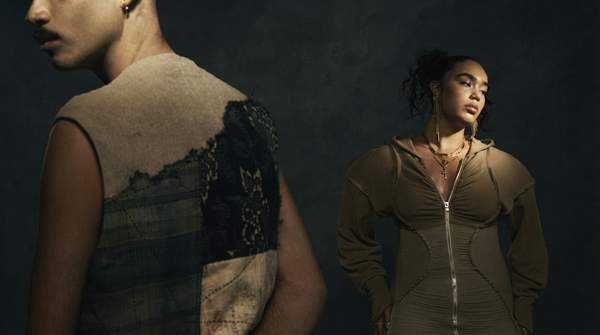
If you work with high-value garments—whether as a designer, buyer, or brand owner—your upcycling decision comes down to a single question: how much transformation does the piece need, and how much skilled labor can you justify? Four techniques dominate the evidence: deconstruction and reconstruction, embellishment and embroidery, dyeing and printing, and material combination. Each offers a distinct trade-off between labor intensity, cost, and creative outcome, and each suits a different kind of luxury application.
Introduction: Upcycling's Role in Luxury Fashion
Upcycling is not recycling. As the sustainable fashion educator Andrea Mesa explains, upcycling repurposes existing garments or materials into new products without industrial decomposition or fiber transformation, which means it generally requires fewer energy resources and chemical treatments than recycling. Each garment becomes what Mesa calls "a canvas with endless possibilities, enhancing exclusivity since no two pieces are exactly alike."
That framing matters enormously for luxury. Writing on the luxury upcycling movement, the fashion writer Dorsa Babaei reports that houses including Louis Vuitton, Gucci, and Hermès are converting discarded materials into exclusive, high-quality items, with roughly 12% of fibers discarded during production and fewer than 1% of garments ever recycled. For a sector that sells scarcity and craftsmanship, upcycling converts a waste problem into a scarcity story: limited-edition pieces whose materials cannot be replicated.
Method 1: Deconstruction & Reconstruction
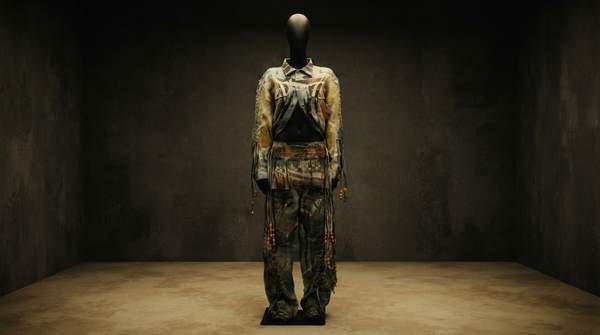
The most radical of the four techniques, deconstruction and reconstruction involves taking an existing garment apart and reassembling it into an entirely new design. According to Babaei's comparison of upcycling methods, the approach produces one-of-a-kind, resource-efficient designs—but it is labor-intensive, demands skilled artisans, and carries higher costs as a result.
In a luxury context, those drawbacks are partly convertible into assets. The intricate redesign work that raises production costs is precisely the kind of visible craftsmanship luxury buyers pay for, and the careful handling the method demands of original materials suits the fine leathers and couture-grade fabrics the sector works with. The trade-off is skill dependence: the creative outcome rises or falls with the designer's ability. Reconstruction suits limited collections and custom orders where exclusivity is the point, rather than scaled production where labor costs compound.
Method 2: Embellishment & Embroidery
Embellishment and embroidery—adding beads, sequins, or decorative stitching to an existing piece—modifies the surface rather than the structure. Babaei's assessment highlights two overlooked strengths: the technique covers flaws effectively, making it a genuine repair-and-refresh strategy for damaged garments, and it is relatively fast compared with the other methods.
Its limitations follow from its nature. Because it works on the surface, the result is bounded by the original garment's structure, and there is a real risk of over-decoration—particularly dangerous on a luxury piece where restraint is part of the value proposition. Material costs for high-quality embellishments can also raise the final product's price significantly. The clearest luxury precedent in the evidence is Gucci's Gucci-Up initiative, which Babaei cites as an example of the practice at brand level. Embellishment best suits revitalizing classic pieces or adding artisanal detail, where the added value comes from intricate handwork rather than structural reinvention.
Method 3: Dyeing & Printing
Dyeing and printing changes a garment's appearance completely rather than its form. According to Babaei's framework, it transforms color outright, works well in batches, and is cost-efficient at volume—making it the most scalable of the four methods. That scalability aligns it with seasonal collections and brand updates, where a house needs to refresh a look across many pieces.
But the same source flags serious caveats for a luxury operation: chemical concerns, inconsistent results when fabrics are mixed, and the need for specialized equipment. For brands whose identity rests on material purity and consistency, mixed-fiber unpredictability is a meaningful risk. A dyeing program also invites scrutiny of chemical handling that a luxury sustainability narrative should be able to withstand. The method rewards houses with controlled, homogeneous material streams and penalizes those working with heterogeneous reclaimed stock.
Method 4: Material Combination
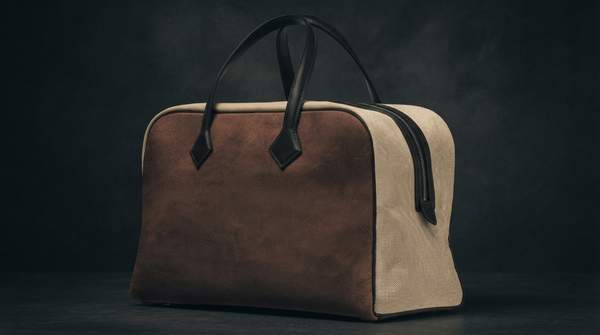
Material combination—pairing fabric scraps and offcuts into new textile compositions—makes use of what would otherwise be discarded, adds textural interest, and reduces waste, per Babaei's comparison. In luxury specifically, Babaei's reporting on the sector notes that leftover fabrics and leather scraps are core inputs, and that houses pair them with advanced technologies to create one-of-a-kind pieces.
The technique's weaknesses are structural. Assembly is complex, durability can be a challenge when unlike materials are joined, and it requires genuine expertise in fabric pairing—knowing which materials can coexist in a single garment without compromising hand feel or longevity. For luxury, that complexity is double-edged: experimental and avant-garde designs are exactly where the method shines, but a poorly paired combination is visible in a way no marketing can obscure. It is a specialist's tool, not a default.
Upcycling Techniques: A Comparative Framework for Luxury Fashion
The table below consolidates the four methods against the three decision dimensions that matter most in a luxury context: creative and sustainability benefit, labor and cost burden, and ideal application. The underlying comparison draws on Babaei's structured method analysis, sector reporting from NC State's Wilson College of Textiles—which identifies patching, cutting, adding, and material mixing as core design techniques for developing new designs from limited and inconsistent materials—and Mesa's account of upcycling's exclusivity advantage.
| Method | Pros (Creative & Sustainability) | Cons (Labor, Cost & Limitations) | Best For (Luxury Application) |
|---|---|---|---|
| Deconstruction & Reconstruction | One-of-a-kind, resource-efficient designs; maximal transformation | Labor-intensive; requires skilled artisans; higher costs; outcome depends on designer skill | Limited collections and custom orders where exclusivity is the selling point |
| Embellishment & Embroidery | Covers flaws on damaged garments; refreshes appearance; relatively fast | Bounded by original garment's structure; risk of over-decoration; material costs can add up | Revitalizing classic pieces; artisanal detailing, in the vein of Gucci-Up |
| Dyeing & Printing | Transforms color completely; works in batches; cost-efficient at volume | Chemical concerns; inconsistent on mixed fabrics; needs specialized equipment | Seasonal collections and brand updates across many pieces |
| Material Combination | Uses fabric scraps and leftover materials; adds texture; reduces waste | Complex assembly; durability challenges; demands fabric-pairing expertise | Experimental, avant-garde design from reclaimed luxury stock |
Read across the rows, a pattern emerges: the techniques that offer the greatest creative transformation—reconstruction and material combination—are also the most labor- and expertise-dependent, while the two surface-level techniques—embellishment and dyeing—are faster and cheaper but more constrained by what the original piece allows. That trade-off is the core of any upcycling decision.
Strategic Considerations for Luxury Brands
Babaei cautions that every upcycling method carries its own strengths and challenges, influencing both production costs and how consumers respond to the final product—and that one of the biggest challenges in upcycling overall is financial and labor demand. For a luxury house, that cost pressure cuts differently than for a mass-market label: hand labor is not a burden to minimize but a story to tell, provided the market will bear the price.
The strategic question is fit between method and output. A house planning a capsule of bespoke, high-margin pieces can absorb reconstruction's costs because each garment's exclusivity justifies it. A house refreshing a seasonal line across dozens of units will find dyeing's batch efficiency more rational. Embellishment occupies a middle position—valuable precisely when the starting garment is damaged or classic and the intervention should be visibly artisanal but structurally conservative. Material combination, the most demanding of expertise, belongs where a brand's identity is experimental.
Making Informed Upcycling Decisions for Luxury
The decision, then: luxury brands and designers should select upcycling techniques based on a clear assessment of desired creative outcome, available labor, and cost constraints, prioritizing methods that enhance exclusivity and craftsmanship. Match the method to the garment's condition and the collection's ambition—structural rebirth for bespoke work, surface artistry for revival pieces, batch dyeing for seasonal breadth, and material combination for boundary-pushing design.
The measurable indicator to watch is increased adoption of specific upcycling techniques in new luxury collections, accompanied by marketing that highlights the artisanal value and sustainability benefits—the pattern already visible in the initiatives Babaei documents, from Gucci-Up to Louis Vuitton's Prélude collection. If upcycled pieces continue appearing in named collections rather than as isolated stunts, the technique-to-application matching described above will have become standard practice rather than experiment.
Sources
- Upcycling vs. Recycling: Key Differences in Sustainable Fashion — Vogue College of Fashion
- How Luxury Brands Redefine Upcycling — Dorsali
- How Fashion Brands Are Embracing Upcycling — Wilson College of Textiles