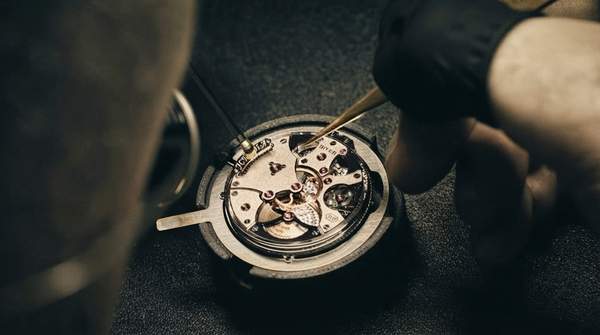
Guilloché, an intricate decorative art, involves engraving precise, repetitive geometric patterns onto watch dials and movements. This technique significantly enhances the visual appeal and perceived value of luxury timepieces. Understanding the nuances between traditional hand-engraved guilloché and its machine-made counterparts is crucial for appreciating the craftsmanship involved and discerning authenticity.
The fundamental technique of guilloché, also known as engine-turning, dates back to the 1500s, initially applied to softer materials such as wood and ivory. By the 1700s, this elaborate process was adapted for metals, finding its enduring place in watchmaking. Today, most guilloché patterns are prominently featured on watch dials, though they can also appear on bridgework, adding value and visual flair to a timepiece.
The Enduring Art of Guilloché: A Legacy of Craftsmanship
Guilloché is a decorative technique that etches intricate geometric patterns onto watch components, such as dials and cases, using a hand-operated lathe. This process results in visually striking designs that elevate a timepiece's aesthetic and value. The technique's origins trace back to the 16th century, initially applied to materials like wood and ivory. However, it was in the 18th century that the process was successfully adapted for metals, establishing its enduring legacy in fine watchmaking. While various patterns exist, such as "hobnail," "sunburst," and "barleycorn," the core method involves engraving lines in either straight or circular formations, often seen on the dial side of watches, and occasionally on bridgework.
Traditional Guilloché: The Mastery of Hand-Operated Machines
Traditional hand-engraved guilloché relies on specialized hand-operated lathes, demanding years of training and exceptional dexterity from an artisan. The primary tools for this intricate craft are the rose engine and the straight-line machine. A rose engine is specifically designed for creating circular and oval guilloché patterns. It operates with a headstock that rocks back and forth as the workpiece rotates, guided by interchangeable rosettes, which act as cam-like pattern guides. This complex interplay allows for the creation of flowing, curvilinear designs.
For linear designs, the straight-line machine moves the workpiece in a linear fashion while a cutting tool engraves the surface. This method produces geometric patterns such as Clous de Paris (hobnail), sunburst, and basketweave, as noted by Oracle Time. The process of engine turning involves numerous operations, requiring a deep understanding of the machine, precise work holding, and expert preparation of cutting tools, skills that can only be cultivated through extensive experience, according to watchmaker Roger Smith. Joshua Shapiro further emphasizes that "there are so many variables in engine turning," highlighting the profound skill and control required for authentic hand-engraved guilloché.
Identifying Hand-Engraved Guilloché: The Marks of Authenticity
Authentic hand-engraved guilloché is distinguished by several key characteristics that reflect the human touch and skill involved in its creation. High-quality hand-engraved patterns exhibit intricate detail, varying depth of cuts, and a pronounced three-dimensional texture. The engraving should have a discernible depth, creating a noticeable play of light and shadow across the surface. Crucially, these patterns often feature subtle, almost imperceptible irregularities in line width or spacing. These slight deviations are not flaws but rather hallmarks of human craftsmanship, differentiating them from the perfect uniformity of machine-made alternatives.
According to watch expert Voutilainen, "When patterns are large and rough, they can be done with CNC, but when it gets small and fine, it can only be made by hand." This underscores that the ultimate finesse and intricate detail of very small and fine patterns are typically only achievable through the meticulous process of hand-engraving. The precision and consistency of the pattern, combined with its depth and sharpness, are paramount in superior guilloché work, maintaining regularity across the entire decorated surface while retaining the unique signature of the artisan's hand.
Machine-Made Guilloché: Precision Through Automation
Modern watchmaking employs automated methods to create guilloché patterns, primarily through Computer Numerical Control (CNC) machining and stamping. CNC machines are capable of replicating guilloché patterns with high precision and consistency, offering unparalleled repeatability and uniform designs with exact dimensions. This method allows for faster production times and higher volumes, making it suitable for larger production scales and more accessible luxury watches. While CNC machining can produce a wide range of patterns, including classic designs and complex geometries, it typically excels with larger and rougher patterns, as noted by Voutilainen.
For instance, the iconic Grande Tapisserie pattern on some Audemars Piguet Royal Oak dials is crafted using a specialized engraving machine, a "guilloché copying machine," which combines engraving, guilloché work, and pantograph techniques to replicate a matrix pattern. This method, while highly precise, produces a uniformity that lacks the subtle, human-induced irregularities found in hand-engraved work. In contrast, stamped guilloché represents the most cost-efficient method for creating patterned dials. However, this process typically results in a flatter appearance because the stamping dulls the metal. Stamped or pressed dials cannot achieve the finely incised lines characteristic of true guilloché, lacking the depth and sharpness of patterns created by rose engines or CNC machines, as noted by ETIEN. The resulting surface often appears duller and less aesthetically pleasing, making it a lower-quality alternative due to these inherent limitations.
Guilloché Pattern Identification Guide
The following guide provides a framework for distinguishing between different guilloché patterns based on their production methods and identifying characteristics, aiding in the evaluation of craftsmanship.
| Production Method | Key Characteristics | Tools Used | Common Patterns (Examples) |
|---|---|---|---|
| Hand-Engraved Guilloché | Exhibits intricate detail, varying depth of cuts, pronounced three-dimensional texture, and subtle, almost imperceptible irregularities in line width or spacing. These irregularities are hallmarks of human touch and skill, not flaws. | Traditional hand-operated lathes (rose engine for circular/oval, straight-line machine for linear) | Capable of producing small and fine patterns that are challenging for machines. Specific patterns like Clous de Paris, sunburst, or basketweave can be hand-engraved. |
| CNC Guilloché | Offers unparalleled precision, repeatability, and uniform patterns with exact dimensions, but lacks the subtle irregularities of hand-made work. Allows for faster production times and higher volumes. | Computer Numerical Control (CNC) machines | Can create a wide range of patterns, including classic designs and complex geometries, especially larger and rougher patterns. The Grande Tapisserie pattern on some Royal Oak dials is created by engraving continuous lines. |
| Stamped Guilloché | Results in a flat appearance because the stamping process dulls the metal. Cannot produce the finely incised lines characteristic of true guilloché, lacking depth and sharpness. Considered a lower quality alternative. | Stamping tool or pressing process | Often used in many popular watches to lower production cost, resulting in a more affordable watch. |
Evaluating Guilloché Craftsmanship: A Discerning Eye
To accurately evaluate guilloché craftsmanship, prioritize visual inspection for subtle irregularities and depth, which are hallmarks of traditional hand-engraving, while recognizing the precision of machine-made alternatives. The presence of subtle, non-uniform variations in line depth or spacing, or the absence of a flat, dull appearance, indicates higher craftsmanship.
Sources
- The Art of Guilloché — SARTORY-BILLARD
- Technical Perspective: Understanding The Art of Guilloché Dials — Monochrome Watches
- Understanding Métiers d’Arts: Guilloché — Revolution Watch
- Learn the Technique Behind the Greatest Watch Dials in the Industry — Gear Patrol
- 10 Styles of Guilloché Dial Every Watch Enthusiast Should Know — Oracle Time
- All about Gullioche watch dial — ETIEN