Luxury brand collaborations have moved decisively beyond the publicity stunt. What began as limited-edition product drops designed to generate headlines has matured into a spectrum of partnership models, each with a different strategic objective and a different depth of integration. For a brand strategist, the practical question is no longer whether to collaborate, but which model of collaboration fits a specific objective: market expansion, innovation, or repositioning. The evidence points to a three-stage evolutionary path, and to a set of success criteria that apply at every stage.
The Evolving Landscape of Luxury Collaborations
The starting point for understanding this evolution is the recognition that luxury brands are no longer confined to their traditional sectors. Writing in ELYSIAN Magazine, Amber Edwards observes that cross-industry collaborations are reshaping how luxury brands engage consumers, with partnerships forming across fashion, travel, wellness, and sportswear. These alliances, she argues, are "not only redefining brand identity but also creating unique, exclusive products and experiences that captivate consumers and maintain cultural relevance in an increasingly competitive market."
That framing matters because it identifies the strategic stakes. A collaboration is no longer a peripheral marketing tactic; it is a mechanism for redefining what a brand is. The broader market context reinforces this. An analysis published by Affluent Research in February 2025, authored by Chandler, concludes that the luxury market is evolving beyond the binary of "quiet vs. loud luxury," with high-end consumers seeking a balance of heritage and modernity, discretion and statement-making, sustainability and indulgence. In that environment, a well-chosen partnership is one of the few instruments that can deliver both novelty and continuity at once.
Stage 1: Limited Editions and Artist Features
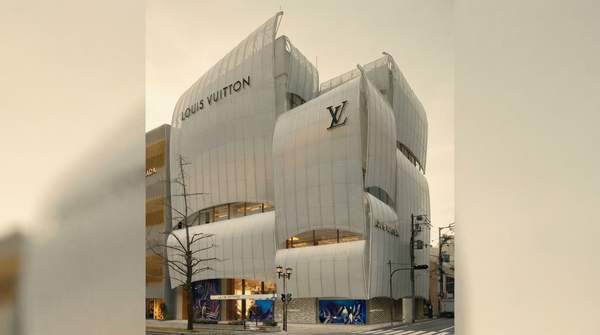
The first stage of the modern collaboration era was product-centric. The widely cited origin point is Louis Vuitton's partnership with the US artist and fashion designer Stephen Sprouse, which produced an iconic limited edition collection in which LV's classic monogram logo was replaced by New York-style graffiti. The project was the brainchild of then-brand chief Marc Jacobs, and many observers credit it with starting the current trend for luxury collaborations.
The strategic logic of this stage is narrow but effective: exclusivity plus novelty equals attention. As the marketing agency Croud notes in its history of luxury collaborations, brand chiefs and creative directors know that the right collaboration generates "acres of publicity" for their firms and the products they launch. The integration level is shallow by design. The partner contributes an aesthetic overlay, the host brand retains its product architecture, and the output is a capsule that disappears when the edition sells out. The value created is awareness and a sense of cultural currency, not structural change to either brand.
Stage 2: Cross-Sector and Streetwear Alliances
The second stage widens the aperture. Rather than pairing with individual artists, luxury houses began forming alliances with brands from entirely different sectors. Edwards's analysis in ELYSIAN Magazine describes this as the defining shift in the contemporary luxury landscape: partnerships spanning travel, wellness, and sportswear that create exclusive products and experiences while maintaining cultural relevance.
Integration here is deeper than in a limited edition. The partner brings not just an aesthetic but an audience, a distribution channel, and a set of cultural associations. The strategic objective shifts from publicity toward reach and relevance: the luxury brand buys access to a consumer base it could not credibly address alone, and the partner gains prestige. The trade-off is greater exposure to brand dilution, because the two creative visions must coexist in a single offering rather than one decorating the other. Managing that tension is what separates a durable alliance from a one-season novelty.
Stage 3: Co-Creative and Integrated Partnerships
The third stage reframes the collaboration itself. The clearest parallel comes from the adjacent discipline of creator marketing, where, as MarkHub24 describes it, what began as "a relatively transactional mechanism — brands paying individuals with large social media followings to endorse products — has evolved into a sophisticated, strategically layered model of creator partnerships that now sits at the center of many brands' marketing architectures."
Applied to luxury, the co-creative model treats the partnership as a jointly authored commercial and media vehicle rather than a licensed product. Both parties contribute to positioning logic, creative direction, and the definition of value exchange. This is the model best suited to repositioning: because the collaboration changes how the brand is perceived rather than merely how visible it is, it carries the highest potential brand value and the highest execution risk. It also demands the most from the partner relationship, which is where the success criteria below become decisive.
Evolutionary Framework of Luxury Brand Collaborations
The table below maps the three stages against their strategic objectives and depth of integration, so a strategist can locate where their brand's current efforts fall and what a move to the next stage would require.
| Stage | Strategic Objective | Level of Integration | Illustrative Form |
|---|---|---|---|
| Limited Editions & Artist Features | Publicity, exclusivity, novelty | Shallow: partner contributes aesthetic overlay to host brand's product | Artist-designed capsule collection, e.g. a monogram reworked by a guest artist |
| Cross-Sector Alliances | Audience reach, cultural relevance, exclusive products and experiences | Medium: two brand identities coexist in one offering, sharing channels and audiences | Partnerships spanning fashion, travel, wellness, or sportswear |
| Co-Creative Partnerships | Brand redefinition, strategic repositioning, mutual value creation | Deep: jointly authored positioning, creative direction, and value exchange | Strategically layered creator or partner relationships at the center of brand architecture |
Read as a progression, the framework shows a consistent pattern: as integration deepens, the strategic objective shifts from visibility, to reach, to identity. A brand can stop at any stage, but it cannot skip the organizational readiness each stage demands.
Strategic Criteria for Successful Collaborations
Whatever stage a brand chooses, the same criteria govern whether the partnership creates value or destroys it. Brand strategist Markus Kramer identifies three. The first is strategic alignment: ensure the partner brand's values, mission, and market positioning align with yours, which he suggests checking by assessing the cultural and operational compatibility between both brands. The second is mutual benefit: identify clear and mutual gains for both parties, thinking specifically about how the collaboration will enhance both brands' market reach and credibility. The third is complementary expertise.
Kramer is also explicit about the risk side of the ledger. Harnessing strategic collaborations, he writes, "can transform your brand, creating opportunities for innovation and unparalleled growth. However, it also poses significant risks if not carefully managed." The Affluent Research analysis adds the market context for that caution: with businesses across sectors prioritizing leaner operations, precision-driven growth, and outcome-oriented strategies, luxury brands must adapt to remain relevant. Careful execution is not a stylistic preference in this climate; it is the condition under which a collaboration survives contact with a demanding consumer base.
Choosing the Right Collaboration Model for Your Brand
Matching model to objective is the strategist's core decision. If the objective is awareness around a launch, a limited edition or artist feature is the lowest-risk instrument, and the Louis Vuitton–Sprouse precedent shows how much publicity a well-executed one can generate. If the objective is market expansion into a new consumer base, a cross-sector alliance is the appropriate tool, provided the partner's audience and cultural associations genuinely transfer. If the objective is repositioning, only the co-creative model is structurally capable of the job, because it changes positioning logic rather than output volume.
Two boundaries should frame the decision. First, this analysis addresses strategy, not the legal and contractual mechanics of forming a partnership, which are a separate discipline. Second, the examples here are illustrative of the stages rather than an exhaustive catalogue of luxury collaborations, and the underlying evidence is publicly available commentary rather than private company data.
Strategic Decision-Making for Future Collaborations
Luxury brand strategists should evaluate potential collaborations against an evolutionary framework, moving beyond simple limited editions to consider cross-sector alliances and co-creative partnerships that align with long-term brand objectives for innovation, reach, and redefinition. The framework above provides the diagnostic: locate the current effort, name the objective it actually serves, and be honest about whether the depth of integration matches that objective.
The measurable indicator to hold any partnership to is the one the success criteria imply: successful collaborations will demonstrate clear strategic alignment, mutual benefits, and careful execution, leading to measurable brand value enhancement and market impact. Before signing, a strategist should be able to state specifically how the partnership will enhance both brands' market reach and credibility, and how that enhancement will be observed once the collaboration is live. A collaboration that cannot answer those questions at the outset is unlikely to answer them in market.
Sources
- Cross-Industry Collaborations & The Evolution of Luxury Brand Partnerships - ELYSIAN Magazine
- Luxury’s Next Chapter: The Evolution of Status, Style, and StrategyIntroduction — Affluent Research
- The history and effectiveness of luxury brand collaborations — Croud
- THE EVOLUTION OF INFLUENCER MARKETING INTO CREATOR PARTNERSHIPS — MarkHub24
- Learning from Luxury: The Strategic Power of Smart Brand Collaborations - Markus Kramer