Richard Avedon did not merely improve fashion photography; he replaced its governing logic. Beginning in the post-World War II era, the International Center of Photography notes, he "revolutionized fashion photography," shaking up "the chilly, static formulas" of the genre and producing "spirited, imaginative photographs" that showed fashion and the modern woman in a new light. I believe the clearest way to understand that revolution is to break it into three concrete shifts: what the picture looked like, what the model was asked to do, and what the image admitted about the real world. Each shift is visible in the evidence surrounding his long career at Harper's Bazaar, Vogue, and The New Yorker, and together they explain why the dynamic, narrative-driven fashion imagery we take for granted today exists at all.
The Static Era: Fashion Before Avedon
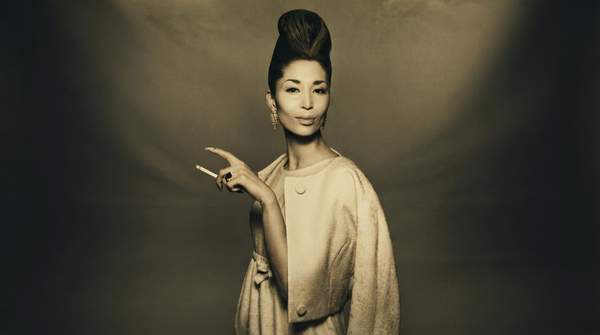
When Avedon entered the field, he joined an industry dominated by what he himself called an old guard. "I was the first young photographer in fashion magazine history. They had all been old before me," he recalled, as reported by Amateur Photographer. The conventions he inherited were formal and posed: garments displayed on passive figures, in settings that existed only to flatter the clothes. The model's job, in that formula, was to be a mannequin—an elegant surface on which a dress could be shown.
The deeper convention was philosophical. As Avedon later reflected, revisiting his early work for his 1993 book An Autobiography, "In the old days, you could cordon off fashion from reality by putting it in a window or up on a pedestal." Fashion photography, in other words, was built on a kind of quarantine: the image was sealed off from everything outside its frame. That seal is precisely what the post-war world could no longer tolerate, and it is the fixed point against which every one of Avedon's innovations must be measured.
Avedon's Revolution: Dynamic Movement and Narrative
Avedon's first and most visible break was kinetic. In his imagery, models ran through Paris streets, balanced on roller skates, flirted with elephants, and danced in cafés—a world, as Amateur Photographer describes it, that "felt spontaneous rather than staged." The famous 1955 image of Dovima in a white Dior evening dress, posed among elephants at the Cirque d'Hiver, is the emblem of this approach: couture removed from the salon and placed into motion, risk, and theatre.
Two qualifications keep this history honest. Avedon did not conjure movement from nothing—his Harper's predecessors Martin Munkacsi and Louise Dahl-Wolfe had already taken tentative steps in that direction, and Norman Parkinson was pursuing similar spontaneity in the UK. What Avedon added was the next level: he embraced their use of movement and layered in narrative storytelling and a sense of theatre. The result was not just a livelier picture but a sequence—a story unfolding across frames. When he moved to Vogue in 1966, he carried that aesthetic into a broader arena, becoming one of the defining portraitists of post-war America. As Amateur Photographer puts it, this kind of imagery is so familiar today that it is easy to forget somebody had to invent it.
The Model as Collaborator: Redefining the Role
The second revolution happened inside the frame. Avedon brought what Amateur Photographer describes as "the strong belief that fashion photography was stronger when models were active collaborators rather than passive mannequins." This is not a small technical adjustment; it redefined the model's function. Where the old formula asked her to display a garment, Avedon's approach asked her to embody a situation—to run, to react, to carry personality and emotion into the picture.
The distinction matters because it changed what a fashion photograph could contain. A mannequin can show a sleeve; a collaborator can show joy, boredom, mischief, or menace, and those expressions become part of the garment's meaning. It also changed the working relationship on set: the model became integral to the narrative and emotional content of the photograph rather than a prop supporting it. I would argue this is the innovation with the longest shadow—contemporary fashion imagery, in which personality and performance are inseparable from the clothes, descends directly from this redefinition.
Injecting Reality: Post-War Truths and American Energy
The third shift was cultural. Avedon injected "a forthright, American energy into a business that had been dominated by Europeans," as the International Center of Photography observes—an energy that resonated with a post-war audience and, in ICP's assessment, continues to influence photographers worldwide. By 1950, ICP notes, he was the most imitated American editorial photographer.
His own explanation for why the old quarantine failed is stark. "After the war, everyone knew too much and had seen too much," he reflected. "There was no escaping what lay outside of the frame." Writing in Harper's BAZAAR, Stephen Mooallem describes how Avedon's work for the magazine became an ur-text for contemporary fashion photography, and quotes a colleague's assessment that Avedon was "remarkable at capturing the zeitgeist in the most diverting, sexy, commercial ways"—while applying that same aesthetic "toward revealing harder truths," becoming "almost a historian of his moment."
That satirical, truth-telling edge sharpened over time. As critic Vince Aletti observes in The New Yorker, Avedon's early images of the luxe life left little room for critique, but their satirical edge peaked in a September 1962 spoof of tabloid sensationalism: casting Mike Nichols and Suzy Parker as Richard Burton and Elizabeth Taylor, stalked by paparazzi during the making of Cleopatra, Avedon teased the era's obsession with celebrity and scandal "without losing sight of the latest in Paris fashion." Fashion imagery, in his hands, could comment on the world rather than hide from it.
The Avedon Revolution: Before and After
The table below contrasts the conventions Avedon displaced with the vision he built, across the three dimensions that define his revolution. Reading each row as a before-and-after pair shows why his work felt so new—and why the "after" column describes the imagery we now consider normal.
| Dimension | Pre-Avedon Fashion Photography | Richard Avedon's Vision |
|---|---|---|
| Photographic Style | Formal, posed, and detached—defined by the "chilly, static formulas" ICP identifies as the genre's convention before his innovations. | Dynamic movement, spontaneity, and narrative storytelling, producing "spirited, imaginative photographs"—models in motion, in staged situations with a sense of theatre. |
| Role of the Model | The model as passive mannequin, present to display garments rather than express personality. | The model as active collaborator, imbued with personality and emotion, integral to the narrative and emotional content of the photograph. |
| Relationship to Reality | An idealized, artificial world "cordoned off from reality"—fashion placed in a window or on a pedestal, sealed from what lay outside the frame. | Engagement with the zeitgeist: post-war "harder truths," a "forthright, American energy," and satire of celebrity culture, resonating with a world that had "seen too much." |
Each row carries its own qualification. The static style was simply the prevailing convention before his arrival; his stylistic transformation reshaped the visual language of the field; the mannequin's role was to display clothes; the collaborator's role made models part of the story; the cordoned-off approach produced a detached, unrealistic portrayal; and his engagement with reality resonated precisely because his audience could no longer accept pure idealization.
A Lasting Legacy: The Modern Fashion Aesthetic
What makes Avedon's case unusual is how completely the revolution was absorbed. The conventions he attacked are now so remote that they read as period artifacts, while his innovations read as default. ICP's assessment is unambiguous: his stylistic innovations continue to influence photographers around the world, and his career anticipated the cultural cross-fertilizations between high art, commercial art, fashion, advertising, and pop culture that have defined the last two decades of visual culture. The 2009 ICP exhibition, developed with The Richard Avedon Foundation by curator Carol Squiers and guest curator Vince Aletti, framed his fashion work as an ongoing force, not a closed chapter.
Embracing the Dynamic: Avedon's Enduring Influence
Modern fashion photographers should analyze Avedon's techniques to understand the origins of dynamic, narrative-driven, and emotionally resonant fashion imagery. The practical takeaway is diagnostic rather than nostalgic: when a contemporary editorial shows a model in motion, mid-story, with personality doing work that a garment alone cannot, that image is executing Avedon's three-part model—movement, collaboration, and engagement with the real world. The measurable indicator of his influence is the continued prevalence of movement, narrative, and personality in contemporary fashion editorials and campaigns. As long as those elements remain the norm rather than the exception, the revolution he began in the pages of Harper's Bazaar is still running.