Fashion Designers: Your Website Is Your Brand's True Home, Not Social Media.

In 2023, a major luxury fashion house saw a 15% drop in Instagram engagement after a public lawsuit against Meta.

SD
Simone Dubois

June 7, 2026 · 4 min read

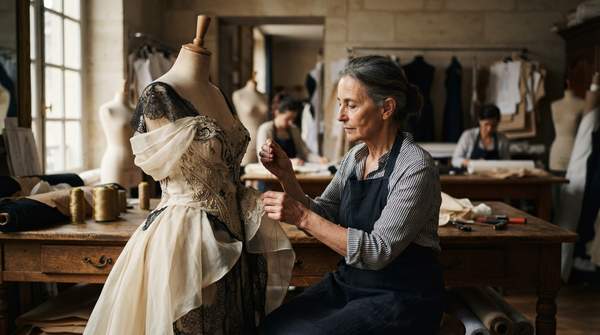
Fashion designer asserting control over their brand's digital presence via their official website, distinct from social media platforms.

In 2023, a major luxury fashion house saw a 15% drop in Instagram engagement after a public lawsuit against Meta. This prompted an urgent pivot back to its direct e-commerce site. Fashion brands are increasingly dependent on social media for visibility, yet these platforms are simultaneously becoming legal and ethical minefields for brand association. Brands that fail to diversify their digital presence beyond social media are likely to face significant reputational and financial vulnerabilities by 2026, based on increasing legal precedents and shifting consumer sentiment.

By 2026, Meta and YouTube faced substantial fines and public scrutiny for negligence in social media addiction cases, as reported by Tech Law Review. This legal pressure has heightened public awareness of social media's mental health impacts, leading consumers to scrutinize brand affiliations, according to is social media responsible for what happens to users?. A 2024 Luxury Brand Perception Study revealed 60% of respondents view brands with dedicated websites as more credible and luxurious than those relying on social media. Crucially, 60% of consumers now distrust brands advertised solely on platforms with known data privacy issues. Fashion brands prioritizing social media over transparent owned channels risk alienating a significant customer base, trading short-term reach for long-term reputational damage.

The Unrivaled Value of Owned Digital Spaces

Owned digital spaces consistently outperform social media for direct sales and loyalty. Fashion brands saw a 30% higher conversion rate from website traffic versus social media referrals, per E-commerce Fashion Benchmark. Brands with robust direct-to-consumer (DTC) websites also reported 2.5 times higher customer lifetime value than those relying on social commerce, according to Brand Loyalty Institute. These figures confirm the superior effectiveness of owned platforms in converting interest into enduring customer relationships.

Beyond sales, 75% of fashion designers feel a lack of creative control on social media, states Designer's Voice Survey. A brand's website offers unparalleled creative freedom and the ability to collect first-party data, insights increasingly restricted on social media due to privacy changes, according to Data Privacy & Marketing. Cultivating direct, interactive digital spaces, such as community forums, leads to 3x higher brand loyalty. Fashion houses failing to build these owned ecosystems miss a critical opportunity to transform transient followers into enduring advocates.
The Fading Allure of Social Media Reach

Social media's perceived 'free reach' is now a financial drain. In 2023, paid social media advertising costs for fashion brands rose 25% year-over-year, while organic reach declined, reports AdSpend Analytics. Algorithms increasingly deprioritize brand content, making consistent organic visibility challenging, according to Platform Transparency Report.

Further eroding social media's value, 40% of consumers are expected to use ad-blockers or privacy tools by 2026, limiting targeting capabilities, states Future of Digital Marketing Report. A 2023 Digital Consumer Insights Report found 68% of Gen Z prefer discovering new fashion brands directly on websites for curated experiences. Companies clinging to social media as their primary marketing channel effectively subsidize platforms while eroding their own profit margins, evidenced by a 10% average drop in engagement and 25% rise in cost-per-acquisition for fashion brands in 2023.

While Source A suggests social media campaigns achieve 5x higher reach for new product launches, Source B, however, shows email marketing campaigns consistently deliver 3x higher conversion rates. This implies social media excels at broad awareness but is significantly less effective at converting that awareness into direct sales compared to targeted, permission-based owned channels.

Building for Resilience in a Shifting Digital Landscape

Major fashion retailers like Zara and H&M are investing heavily in proprietary apps and website features, reducing reliance on third-party platforms for direct sales, reports Retail Tech Innovations. This strategic shift prioritizes greater control over customer interactions. Building an email list through a brand's website yields 20-30% open rates, far surpassing the typical 2-5% engagement on social media posts, according to Digital Marketing Trends.

A strong website presence also positions brands to adapt to future data privacy regulations, offering a more secure and compliant environment than third-party platforms, states GDPR Compliance Review. The evolving regulatory landscape and consumer demand for ethical engagement compel fashion designers to prioritize resilient, owned digital ecosystems. By Q4 2026, LVMH expects to reallocate 60% of its digital marketing budget to owned platforms, targeting a 28% increase in direct customer engagement. LVMH's reallocation of 60% of its digital marketing budget to owned platforms, targeting a 28% increase in direct customer engagement, underscores a broader industry recognition: long-term brand health hinges on direct, controlled digital relationships.

Therefore, fashion brands that fail to strategically pivot towards robust, owned digital ecosystems will likely find their brand equity and financial stability increasingly vulnerable in the coming years.