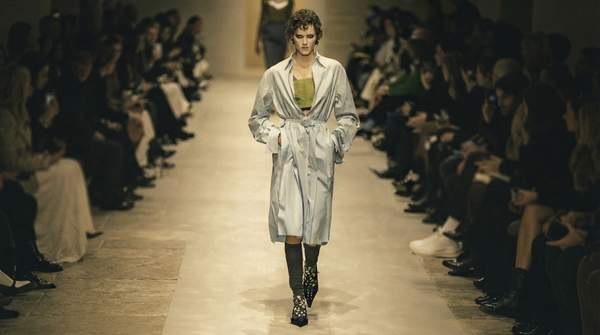
No single runway format wins on every dimension. The strategic choice for a luxury brand comes down to which objective dominates: a physical show delivers the strongest immediate buzz and immersive brand experience, a digital show widens global reach while reducing production cost and waste, and a hybrid format attempts to capture both at the price of added integration complexity. Understanding the trade-offs across audience, emotion, cost, and messaging is what separates a deliberate decision from an inherited one.
Introduction: The Evolving Landscape of Luxury Fashion Shows
Fashion shows have evolved from garment presentations into what event production specialists describe as "an absolutely value-adding experience designed to captivate the audience, get exposure, and amplify the brand message." The entire production, from concept to the final step on the catwalk, exists to serve that amplification. Mastering it, as Fashion Week Online's production guidance puts it, can mean the difference between a lackluster presentation and a genuine showstopper.
The format question became unavoidable when brands experimented with digital runways and discovered an uneven picture. Reporting by Vogue's custom insights team found that while prominent houses—Dior, Gucci, Louis Vuitton, Chanel, and Alexander McQueen—held attention through established popularity, the overall buzz generated by the first round of digital runways fell well short of physical shows. Yet the same reporting noted that brands demonstrating agility, creativity, and new forms of consumer connection performed best, suggesting the digital deficit is not permanent. For luxury executives, the decision is now a standing strategic question, not a pandemic improvisation.
Physical Runway Shows: Unrivaled Experiential Impact
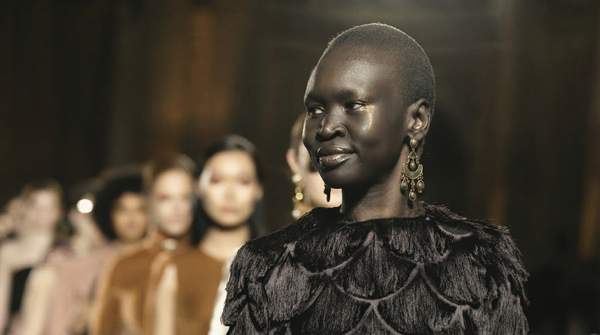
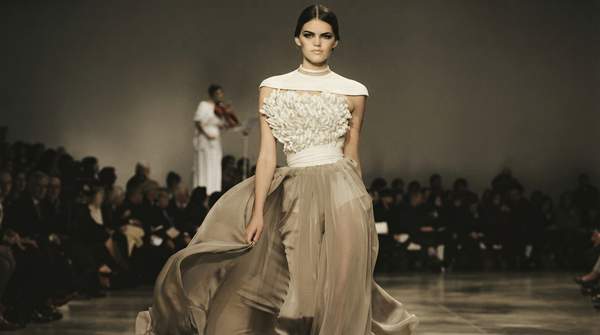
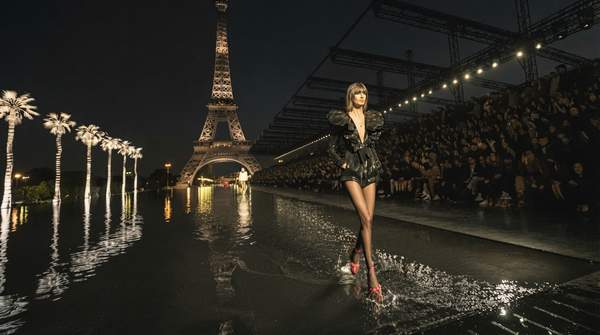
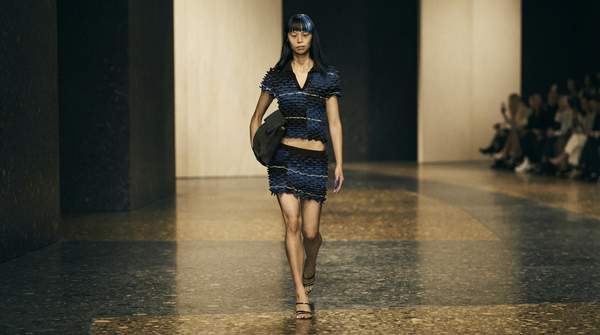
The physical show's power lies in its total sensory control. Production guidance emphasizes that a show's theme dictates everything downstream—the aesthetics, the mood, and, crucially, the venue. From there, lighting and sound govern the audience's experience: soft ambient lighting or dramatic spotlights keep the clothes as the stars while sculpting atmosphere, while sound design sets pacing and emotion. A pulsating electronic beat can drive a show's tempo; classical scoring can lend it elegance.
The human element compounds this. Photogenics Media's analysis of the luxury runway notes that models embody the spirit of a collection, making the presentation dynamic and engaging, and that live music and performance art elevate both atmosphere and emotional impact. This in-person intensity is precisely what early digital formats struggled to replicate. Vogue's assessment that digital buzz lagged physical shows reflects this inherent asymmetry: a shared physical space, curated minute by minute, produces an immediacy that a screen does not. The qualification matters, though—creative digital executions can narrow the gap, and the comparison reflects general trends observed during early digital adoption rather than a fixed law.
Digital Runway Shows: Expanding Reach Through Innovation
Digital formats invert the physical show's economics and geography. Analysis of technology in luxury fashion highlights that the metaverse allows virtual apparel design, letting designers build mockups and test fits at a fraction of the time and cost of traditional prototyping—with no physical samples and no material costs. An immersive-technology studio working with luxury brands, YORD, frames the measurement directly: brands should quantify "event-cost deltas between virtual and physical activation" alongside reductions in physical sample production. In other words, the cost advantage is real but specific to the digital elements, and initial investment in technology infrastructure may be required.
On reach and engagement, digital formats are structurally stronger. Photogenics Media identifies technology integration—augmented reality and streaming platforms in particular—as the mechanism by which designers widen their audience beyond the invitation list. Engagement rewards creativity: Vogue reported that brands seeing the highest social-media engagement uplift were those breaking from convention, with gamification and gaming platforms emerging as luxury trends; Twitch's streaming of Burberry's Spring/Summer 2021 show from London Fashion Week opened an alternative digital channel. XR technologies also generate behavioral data—dwell time, micro-interactions, favorites—that YORD says enables finer CRM segmentation. One caution from YORD's analysis: traditional media, including runway shows and static campaigns, "no longer fully engage digital-native luxury consumers," which cuts both ways—it argues for digital experimentation while underscoring that execution quality determines outcomes.
Hybrid Runway Shows: Blending the Best of Both Worlds
The hybrid format pairs a physical event with digital extension—livestreams, virtual experiences, or platform-native content layered on top of an in-person show. Dior's approach illustrates the ambition: Jing Daily's reporting frames the house as setting the benchmark for runway livestreaming while remaining a digital veteran at luxury marketing's vanguard. The model's logic is straightforward: retain the room's emotional charge for editors, buyers, and clients while transmitting the event globally.
The cost is complexity. A hybrid show requires executing a full physical production while simultaneously building a compelling digital layer, and its effectiveness depends on seamless integration and the strategic use of both components. A livestream that merely points a camera at the catwalk inherits neither the room's atmosphere nor digital-native engagement techniques. YORD's analysis supports the underlying premise: AI and XR tools, it argues, enable brands to tell more nuanced stories, offer selective access, and create emotional resonance "across both physical and digital touchpoints"—which is, in essence, the hybrid show's mandate. The format is a balance, not a compromise, only when both halves are resourced properly.
Runway Show Format Decision Framework
The framework below compares the three formats across the four dimensions that drive the strategic choice. Use it by first ranking your brand's objectives, then reading down the column that matters most. The comparison synthesizes industry reporting and production analysis; cost findings are qualitative, based on production complexity rather than published budgets.
| Dimension | Physical Runway | Digital Runway | Hybrid Runway |
|---|---|---|---|
| Audience Reach & Engagement | Exclusive in-person audience; strongest immediate buzz, but capped by venue capacity | Widest reach via streaming, AR, and gaming platforms; engagement depends on creative execution such as gamification | Physical exclusivity plus global digital extension; requires integrating both audiences deliberately |
| Experiential & Emotional Impact | Highest—curated lighting, sound design, live performance, and models embodying the collection in a shared space | XR and metaverse platforms aim for immersive engagement and intimacy, but early digital runways generated less buzz than physical shows | Retains the room's emotional charge; digital layer's impact depends on seamless execution |
| Production Complexity & Cost | Highest—venue, logistics, staging, lighting, sound, and on-site AV all scale with ambition | Virtual prototyping cuts sample costs and time; measurable event-cost deltas favor virtual activation over physical, though technology investment is required | Doubled scope—full physical production plus a resourced digital build |
| Brand Messaging & Storytelling | Immersive, curated narrative where every production element amplifies the theme | New storytelling forms; authenticity and community connection drove the strongest engagement uplifts in digital formats | Nuanced stories across both physical and digital touchpoints, if integration is seamless |
Read horizontally, the table yields clear guidance. A brand optimizing for maximum impact on press, buyers, and top clients—where cost is secondary—should weight the physical column. A brand prioritizing global reach, younger digital-native consumers, or reduced waste should weight the digital column. A brand needing both, with the budget to resource two productions, should pursue hybrid, accepting that the format fails when either half is treated as an afterthought.
Aligning Your Runway Strategy with Brand Objectives
Luxury fashion brands should strategically choose their runway format—physical, digital, or hybrid—by aligning its inherent strengths with their primary goals for audience reach, experiential impact, production efficiency, and brand messaging. The evidence supports no universal answer: physical shows win on buzz and immersion, digital formats win on reach, cost, and waste reduction, and hybrid formats win only when integration is treated as a discipline rather than a courtesy. Scope matters too—this analysis is drawn from luxury-sector reporting and may not transfer to fast fashion, and it addresses strategy, not the technical implementation of XR or AI.
Make the decision auditable. The measurable indicator is the brand's next fashion show announcement and its chosen format, followed by post-event engagement metrics and media coverage. YORD's framework gives executives the vocabulary: track engagement metrics, event-cost deltas against prior physical activations, sentiment lift, and repeat-purchase behavior among exposed cohorts. Choosing a format is a hypothesis; those metrics are how a brand learns whether its next show should repeat the bet or change it.
Sources
- From Concept to Catwalk: Event Production Strategies for Showstopping Fashion Shows — Fashionweekonline
- Luxury's digital evolution — Vogue
- Luxury Designer Runway: What It Represents — Photogenics Media
- Consumer Engagement Through Technology: Luxury Fashion Brands vs Fast Fashion Brands — Iris Publishers
- The Ultimate Immersive Solutions for Luxury Fashion Brands — YORD | XR & AI Creative Studio
- Dior Takes Fashion Week Marketing To New Highs — Jingdaily