Every designer who sets out to embed advanced electronics into a high-fashion garment faces one decision before any other: should the technology disappear into the garment, or should it be celebrated as ornament? That single aesthetic choice determines nearly everything downstream — the power strategy, the washability solution, the flexibility and placement of components, and ultimately whether the piece can survive real wear. A scholarly review of wearable technology clothing by Silvija Vaidogaite and Danmei Sun frames the core problem plainly: for the customer to be fully satisfied, the product "has to both look good and work." This article translates that form-versus-function tension into a practical decision framework for garment designers.
The Dual Aesthetic Paths: Seamless Integration vs. Ornamental Tech
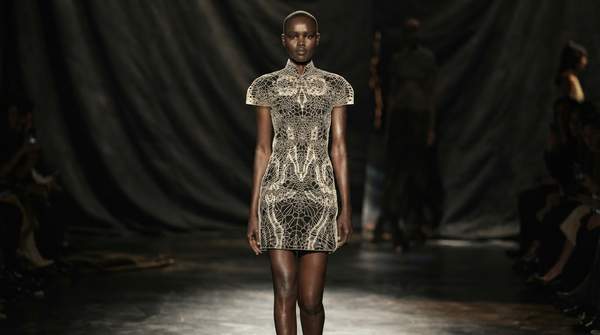
Two distinct philosophies govern how wearable technology appears in fashion. The first treats technology as an invisible layer woven into the textile itself — fabrics that sense pressure or movement, temperature-regulating fibers, or illuminated materials such as the optical-fiber fabrics the Vaidogaite and Sun review attributes to designer Castagnacci's Luminex and Photonic work, where thin light-reflecting optical fibers and LEDs are woven directly into fabric to produce luminescence.
The second philosophy deliberately foregrounds the technology as a design feature. The WHOOP Meridian band, launched in late 2026 and described by Haute Living's Angelika Semilof, illustrates the approach: a wellness tracker reworked as a Milanese mesh bracelet with woven-metal construction, a tapered silhouette and an adjustable magnetic closure, so that, in the publication's words, "the future of health technology does not have to look technical." Though Meridian is a wrist accessory rather than a garment, it demonstrates the ornamental strategy a designer can borrow for garment-integrated components.
Navigating Technical Realities: Core Constraints for Wearable Fashion
Whichever aesthetic a designer chooses, three technical constraints recur in the evidence. The first is power: much wearable technology clothing, as Vaidogaite and Sun note, is powered by batteries that would have to be removed before washing. The second is durability and washability — integrated technology must withstand the constant wear and tear of the garment material itself, and the authors argue that advanced core technologies resisting standard washing techniques, together with appropriate flexible encapsulation solutions, would be needed for large-scale adoption.
The third constraint is component integration itself. As a Printful overview of smart fabrics observes, "the process of integrating electronic components into fabric remains complex," even as active smart textiles — temperature-regulating fibers, printed sensors reacting to body heat, illuminated graphics pulsing with heart rate — become more affordable. For luxury garments specifically, The RealReal's industry commentary adds a commercial dimension: traditional luxury houses that rely on craftsmanship heritage may risk brand dilution by incorporating advanced tech, a risk that the design approach itself can either amplify or mitigate.