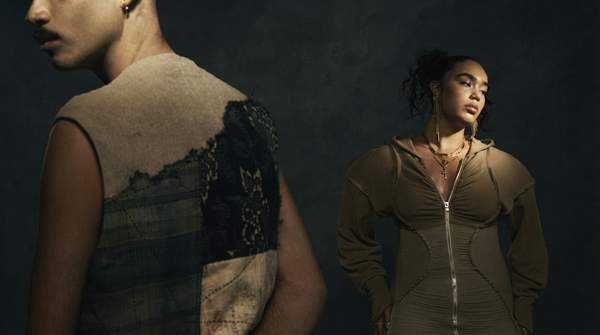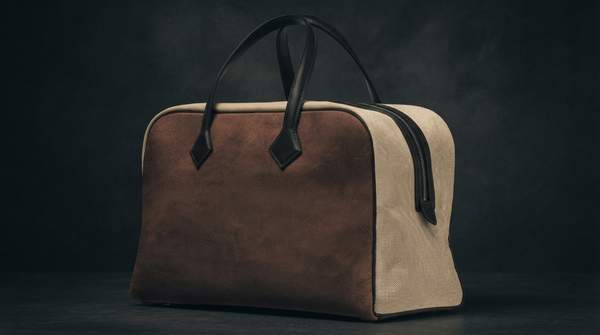
The next-generation materials with the clearest evidence of luxury adoption today are mycelium leather, biosynthetic protein fibers and lab-grown alternative leathers. MycoWorks' Reishi mycelium material has appeared in a Hermès bag; Spiber's Brewed Protein has been used in a limited-edition North Face parka; and Modern Meadow's alt-leather features in handbags from Tory Burch and Everlane. I believe the most useful way to evaluate these options is not to ask which is "greenest" in the abstract, but to compare each on its source, environmental claims, performance characteristics and demonstrated adoption — which is what this article does.
The Rise of Next-Generation Sustainable Materials in Luxury Fashion
Two distinct innovation pathways are converging on the same problem. The first is bio-fabrication: growing materials from engineered microbes, fungi or bacteria in laboratories — algae for knits, mushrooms for leather, bacteria for silk, as textile scientists now do. The second is rethinking what "leather" can be made from, using biotechnology to concoct animal-free, fossil-free alternatives rather than processing animal hides.
What counts as "next-generation" is not just novelty. Reporting by Elsa Wenzel for Trellis, drawing on a June report backed by Kering and the Laudes Foundation, defines these materials as using renewable ingredients and fewer finite resources such as petroleum, land and water, while enabling circularity and minimizing risks to people and animals. The commercial signal is real: next-gen startups raised $500 million in 2023, according to the Material Innovation Initiative, and Gucci, Stella McCartney, Puma and Reformation are among the first-mover brands experimenting. Many materials have starred only on catwalks or in one-off collections, but a few are slipping into the mainstream.
Mycelium Leather: Fungi-Based Innovation
Mycelium leather is grown from the root structure of fungi. Among the companies specializing in it, MycoWorks continues to produce its biodegradable Reishi material, which featured in a luxury Hermès bag — arguably the clearest signal yet that a bio-fabricated material can meet the threshold of a top-tier luxury house. In 2023, MycoWorks harvested its first thousand sheets, a milestone that marks the transition from laboratory curiosity to production at a repeatable, if still modest, scale.
The category is not without casualties, and that matters for any selection decision. Bolt Threads abandoned its Mylo mycelium material, a reminder that technical promise does not guarantee commercial survival. Adoption has also been shape-specific: mycelium leather mostly features in handbags and shoes rather than large garments, though Copenhagen brand Ganni fashioned a blazer in 2023 from material made by mycelium startup Polybion. For luxury applications, the evidence points to accessories as the current proving ground.
Biosynthetic Silk: Engineered for Performance
The second pathway is protein engineering. Spiber, based in Tsuruoka, Japan, uses synthetic biology to create Brewed Protein, the basis for custom fibers resembling silk, cashmere or wool — a single platform that can be tuned toward different luxury hand-feels. Its most famous demonstration is the limited-edition North Face Moon Parka of 2019, sold by lottery and now an eBay collectible, which suggests both genuine performance credibility and deliberately constrained volume.
A parallel effort comes from Kraig Biocraft Laboratories of Ann Arbor, Michigan, which has genetically engineered silkworms to produce spider silk for fibers. The company's target, however, is high-performance apparel rather than a silk alternative — a distinction worth preserving, since spider silk's appeal rests on strength rather than drape. Writing in No Kill Mag, Katya Moorman notes that scientists have only in recent years tried to mimic in labs the elusive properties of spiderwebs, which are stronger than bulletproof Kevlar. Bio-fabricated silk is also described as strong, stretchy, nontoxic and biodegradable, positioning it as an alternative to petroleum-derived fibers like nylon.
Bridging the Performance-Sustainability Gap
The historical objection to sustainable materials was performance. As Moorman frames it, natural fibers historically lacked performative functions such as waterproofing and stretch that synthetic fibers provide, so eco-conscious shopping once meant giving up everything shiny, stretchy or fuzzy. That trade-off, she argues, is now dissolving: textile scientists have found ways to bridge the gap between green technologies and consumers' demand for performance and style.
The evidence supports this directionally rather than metrically. What the record shows is that next-generation materials are being engineered specifically to carry performance attributes — strength, stretch, biodegradability — rather than accepting sustainability as a compromise. Brewed Protein's spider-silk-adjacent strength and Reishi's use in a Hermès bag both indicate that performance expectations at the luxury level are being tested in real products. What the record does not yet provide is comparative data on durability or water resistance across these materials; any selection process should treat performance claims as product-specific, not category-wide.
Comparative Overview of Next-Gen Sustainable Materials
The table below aligns the evidenced materials against consistent criteria — source, environmental benefit, performance and adoption — so their relative maturity for luxury applications can be read at a glance.
| Material | Source / Process | Key Environmental Benefit | Reported Performance Characteristics | Known Brand Adoptions / Scalability |
|---|---|---|---|---|
| Mycelium leather (Reishi) | Grown from mycelium, the root structure of fungi, by MycoWorks | Biodegradable; part of a next-gen class using renewable ingredients and fewer finite resources such as petroleum, land and water | Engineered to address the historical sustainability-performance trade-off; suited to handbags and shoes more than large garments | Featured in a luxury Hermès bag; first thousand sheets harvested in 2023 |
| Biosynthetic silk (Brewed Protein) | Synthetic biology by Spiber of Tsuruoka, Japan; fibers can resemble silk, cashmere or wool | Described as nontoxic and biodegradable; positioned as an alternative to petroleum-derived fibers like nylon | Strong and stretchy; draws on spider-silk research, where webs are stronger than bulletproof Kevlar | Limited-edition North Face Moon Parka (2019), sold by lottery; volume deliberately constrained |
| Lab-grown alt-leather (Modern Meadow) | Bio-fabricated leather eschewing animal and fossil products | Avoids animal and fossil inputs, alongside other alt-leathers used in jackets, bags and shoes | Performance claims not specified in the reporting reviewed; adoption is in handbag formats | Used in handbags by Tory Burch and Everlane |
Read together, the rows show a clear pattern: mycelium leather has the strongest luxury validation via Hermès, biosynthetic silk has the strongest performance narrative but the most constrained distribution, and lab-grown alt-leather has the broadest commercial footprint through accessible brands. None of the three yet has published production volumes or comparative performance metrics, so maturity should be judged by demonstrated adoption, not promises.
Informing Material Selection for Sustainable Luxury
Luxury brands and designers can make informed material selections by evaluating next-generation sustainable options based on their specific environmental benefits, performance characteristics, and demonstrated market adoption. On the current evidence, mycelium leather is the most defensible choice for luxury accessories, biosynthetic protein fibers suit performance-led or limited-edition pieces, and alt-leathers offer a wider commercial runway with less luxury-specific validation. The measurable indicator to watch is increased adoption of bio-fabricated and agricultural by-product materials in new luxury collections, coupled with public announcements of performance advancements — milestones such as MycoWorks' thousand-sheet harvest and the Hermès collaboration show what those signals look like in practice.