Luxury fashion has a greenwashing problem, and the reliable way through it is verification. The most credible evaluations of luxury houses rank them on public evidence of what they are doing about wages, water and materials, not on their marketing claims. I believe the practical answer for any shopper or professional is a five-part test: traceable supply chains, independent certifications, standardized impact measurement, credible social responsibility reporting, and a serious answer to overproduction. This article turns that test into a checklist you can apply to any brand.
Navigating Luxury Fashion's Green Claims: A Framework for Verifiable Sustainability
The core problem is structural. As Greenstory's analysis of greenwashing in fashion notes, the industry has been criticized for touting sustainability credentials without addressing the climate damage caused by production and overproduction, and there is no standardization or legally binding framework regulating what brands must disclose. That regulatory gap is closing slowly: the EU's initiative on substantiating green claims holds that environmental claims should be reliable, comparable and verifiable, and that brands should substantiate them against a standard methodology. Until regulation catches up, the burden of verification falls on the reader.
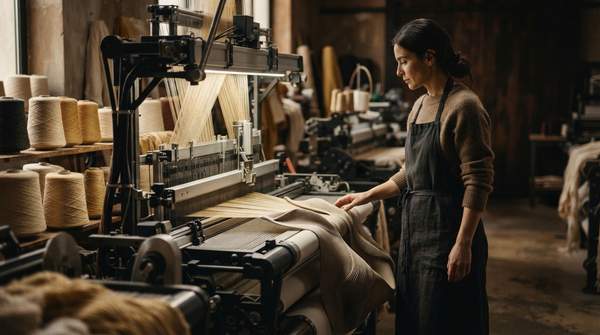
What does verifiable look like in practice? Brands making genuine efforts back their claims with tangible evidence, sharing specific information about their supply chains, materials, the people involved and production processes across product pages, packaging and catalogues, as Apparel Resources reports. The distinction that matters is between specificity and vagueness: a named tannery, a certified fiber, a published impact figure versus an adjective.
Spotting Greenwashing: Common Tactics and Red Flags
Greenwashing rarely announces itself. Its signature is the unsupported adjective: "conscious," "eco-friendly," "responsible" applied to a collection without data behind it. A brand that highlights one virtuous attribute, a recycled trim on a garment, while saying nothing about its overall footprint, is directing your attention away from the larger picture. The same applies to self-created labels and badges whose verification process is opaque.
Consumer skepticism is itself now a documented obstacle. A study of luxury sustainability communication on Instagram, covering Gucci, Stella McCartney, Chloé and Prada, observed that consumers have become sceptical of brands' sustainability claims due to increasing greenwashing scandals, making credible communication a strategic challenge for luxury houses. The lesson: treat every claim as unverified until the brand supplies the evidence itself.
Criterion 1: Transparent Supply Chains and Traceability
The first question to ask a brand is: can it tell you where its materials and labor actually come from? Genuine transparency means specific, public information about suppliers, material origins, the people involved and production processes, disclosed in a form you can check. Rankings of sustainable luxury brands increasingly take exactly this approach, evaluating houses on public evidence rather than marketing language.
The red flag is the mirror image: vague invocations of "ethical sourcing" or "sustainable materials" with no named origins, no supplier information and no data. If a brand cannot say where its leather was tanned or where its silk was woven, the claim cannot be verified, and unverifiable claims are the essence of greenwashing.
Criterion 2: Credible Third-Party Certifications
Independent certification is the strongest single signal, because it substitutes external audit for self-declaration. For luxury materials, the relevant standards are specific. Textile Exchange has spent more than twenty years operating a system of material-specific standards for the fashion and textile industry: the Responsible Alpaca Standard safeguards alpaca welfare and surrounding ecosystems, the Responsible Down Standard protects ducks and geese used for down, and the Content Claim Standard verifies that claimed raw material inputs are actually present in the final product.
Other credible schemes cover different risks. The Global Traceable Down Standard was developed with animal welfare organizations and builds on Patagonia's Down Standard, while the Fur Free Retailer program, run by the Fur Free Alliance of more than fifty animal and environmental protection organizations, lets consumers check a retailer's fur policy directly. The key test is independence: a badge is meaningful only if a body outside the brand defines the standard and verifies compliance. Beware of in-house "eco" labels with no published criteria.
Criterion 3: Standardized Impact Measurement (Life Cycle Assessment)
Claims about environmental performance should be substantiated against a standard methodology. Life cycle assessment is the internationally accepted approach: it evaluates a product's environmental impact from raw material extraction through end-of-life, giving reliable and verifiable credentials to sustainability claims, as Greenstory explains in its analysis of the EU's green claims initiative. A brand that publishes LCA-based figures for its products is inviting scrutiny; a brand that offers only aspiration is not.
When you examine a sustainability report, look for numbers with methodology attached: emissions per product, water use, and the scope of what was measured. A claim without a method is a slogan.
Criterion 4: Ethical Labor and Social Responsibility
Sustainability is social as well as environmental. The evaluations that rank luxury houses on public evidence explicitly include wages and working conditions alongside water and materials. A credible brand discloses its labor policies and the conditions under which its products are made, not merely its carbon figures.
The evidence here is thinner than for materials, so apply the same standard of specificity: named commitments, published supplier labor information, and third-party social auditing where available. Treat unverified "fair" and "ethical" language as you would "eco-friendly" on a label.
Criterion 5: Addressing Overproduction and Embracing Circularity
The hardest question for luxury is volume. The fashion industry has been criticized for touting sustainability credentials without addressing the climate damage caused by production and overproduction, and luxury is not exempt: a recycled capsule does not offset a business model built on ever-growing output. Ask what a brand says about production volumes, waste and end-of-life for its products.
Where the evidence is thin, say so honestly: few brands disclose volumes. That silence is itself informative, and its absence from a brand's reporting is a legitimate ground for caution rather than reassurance.
Your Luxury Fashion Sustainability Checklist
Use this diagnostic on any brand's public disclosures, its sustainability report, product pages and website. For each criterion, ask whether the evidence points to genuine practice or a red flag.
| Criterion | Genuine sustainability indicators | Greenwashing red flags |
|---|---|---|
| Transparency & traceability | Specific public information on supply chains, material origins, people involved and production processes | Vague "ethical sourcing" or "sustainable materials" claims with no verifiable origins or data |
| Third-party certifications | Independent standards such as RAS, RDS, CCS, Global Traceable Down Standard, or Fur Free Retailer listing | Self-created labels or badges with no transparent verification process |
| Impact measurement | Life cycle assessment methodology with publicly shared results | Environmental claims with no standard methodology behind them |
| Social responsibility | Public evidence on wages and working conditions | "Fair" and "ethical" language without disclosed labor information |
| Production volume & circularity | Disclosure of production volumes, waste and end-of-life approach | Silence on volumes while marketing recycled or "conscious" lines |
The reasoning path is simple: each row contrasts what can be checked against what merely sounds good. A brand that fails two or more rows is relying on narrative rather than evidence.
Making Informed Choices: Your Next Steps in Sustainable Luxury
The decision: prioritize luxury fashion brands that provide specific, verifiable evidence across multiple sustainability criteria, rather than relying on vague or unsubstantiated claims. The measurable indicator is whether a brand's public sustainability reports, product labels and website content consistently feature third-party certifications, detailed supply chain information, and transparent impact assessment methodologies. Check that indicator before your next purchase, and let the brand's own disclosures, not its advertising, make the case.
Sources
- Green marketing and greenwashing in sustainable fashion — Greenstory
- When Every Brand Claims to Be Sustainable, What Makes One Stand Out? — Apparel Resources
- THESIS
- 10 Most Sustainable Luxury Fashion Brands (2026) — OYO
- Textileexchange
- Sustainable Fashion Certifications — The Considerate Consumer
- Sustainability Certification Organizations in the Fashion Industry — FashionUnited