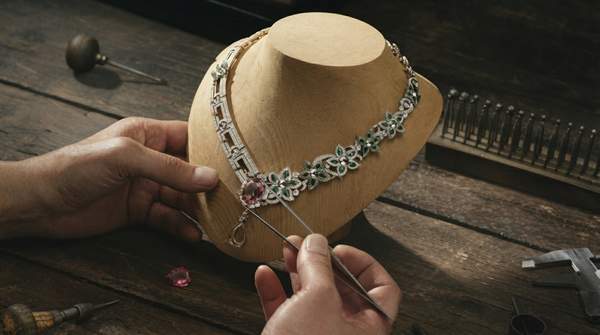
High jewelry earns its exceptional quality and value through a sequential creative process that has remained fundamentally artisanal: a design conceived and rendered by hand, rare gemstones and precious metals sourced and selected as the foundation of worth, metal fabricated and stones set by specialists, and a final refinement that can consume hundreds of hours of skilled labor. Understanding these four stages—Design and Conception, Material Sourcing and Selection, Hand Fabrication and Setting, and Finishing and Polishing—gives collectors a framework for assessing why a piece of haute joaillerie commands its place beyond ordinary fine jewelry.
The Art of Haute Joaillerie: An Overview
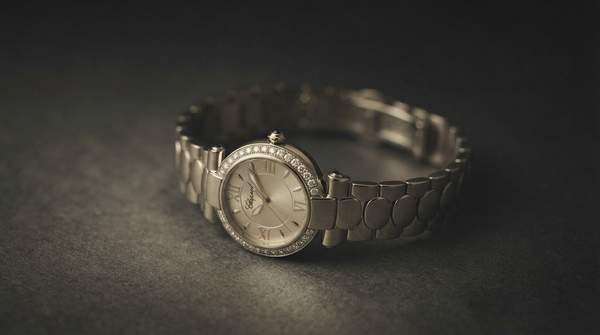
Sotheby's collecting guide defines high jewelry as exceptional pieces distinguished by rare gemstones, extraordinary craftsmanship, and innovative design—often fully bespoke, one-of-a-kind treasures or designs produced in extremely limited numbers. Crucially, the auction house notes that although high jewelry is typically more expensive than fine jewelry, its value is not determined by price alone. The essence lies in exceptional quality, the size and rarity of the diamonds and gemstones, and the artistry behind the design.
What separates the category from mass-market production is the convergence of three forces: meticulous craftsmanship, the rarity of the piece, and the creativity infused into every design. Rarity is structural, not incidental. Because high jewelry relies on exceptional gemstones, highly skilled artisans, and time-intensive production, many pieces cannot be replicated once the stones are sourced. Only the most talented artisans, in Sotheby's characterization, are entrusted with the design, creation, and refinement of these works.
The Four Stages of High Jewelry Creation
The process can be modeled as a strict chronology in which each stage builds on the last, and each contributes a distinct driver of the final piece's quality, rarity, and value. The table below assembles that sequence.
| Stage | Key Activities | Artisanal Skill Focus | Distinction from Mass Production |
|---|---|---|---|
| 1. Design & Conception | Initial drawing developed into a finalized gouaché painting representing the jewel's volumes, stones, colors, and golds | Imagination and savoir-faire; meticulous rendering of light, color, and texture | Unique, bespoke design rather than pre-designed, repeated options |
| 2. Material Sourcing & Selection | Sourcing and preparing the rarest gemstones and precious metals | Gemological judgment; matching exceptional stones to the design | Premium precious metals and genuine, rare gemstones rather than cheaper substitutes |
| 3. Hand Fabrication & Setting | Constructing the model in wax or metal, crafting the structure, and setting each stone | Mock-up makers, jewelers, gemologists, and stone setters working by hand | Manual processes requiring experience and judgment that machines cannot replicate |
| 4. Finishing & Polishing | Final refinement of surfaces and settings, often requiring hundreds of hours | Only the most talented artisans entrusted with refinement | Finishing far superior to mass-market fine jewelry |
Stage 1: Design and Conception – From Idea to Gouache
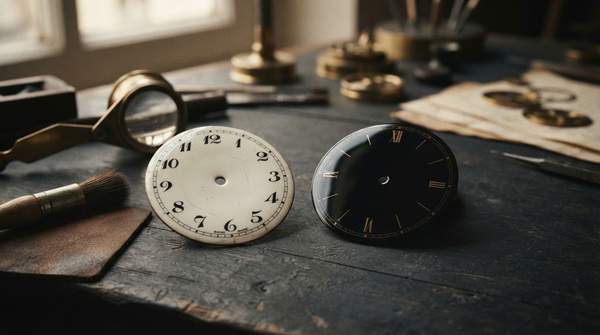
Creation begins with the designer, whom Van Cleef & Arpels describes as the origin of the process: a figure who must possess both imagination and savoir-faire. The design moves from an initial drawing to a final gouaché—a painting that, according to L'École Van Cleef & Arpels, guides all craftsmen involved in the piece's creation, including mock-up makers, jewelers, gemologists, and stone setters. The technique consists of representing a jewel's three-dimensional volumes on a flat drawing, with three elements to master: light, color, and texture.
The gouaché occupies a pivotal position in the chronology. As a feature on the technique explains, the finalized gouaché "is at the same time the final step of the creative process before the fabrication of the jewel to come"—and also the beginning of the jewel's realization in three dimensions, when a model is made in wax or metal. While gouaché remains the traditional blueprint, modern planning tools such as computer-aided design and 3D modeling are also used for precise preparation.
Stage 2: Material Sourcing and Selection – The Foundation of Value
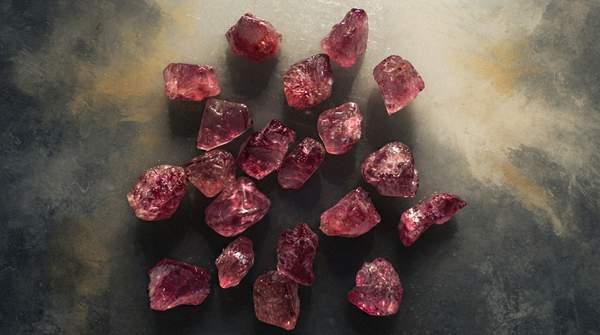
Once the design is fixed, attention turns to the materials that will define the piece's intrinsic worth. Sotheby's places the size and rarity of diamonds and gemstones at the core of what high jewelry is, alongside craftsmanship and design artistry. This is the stage at which a piece's fundamental value is established: exceptional stones cannot be conjured, only found, and their scarcity is what makes many high jewelry pieces impossible to replicate once sourced.
Material selection also separates high jewelry from volume production at the level of substance rather than branding. Artisan jewelry guides, such as one published by the studio DORUZOVA, contrast handcrafted work—built on precious metals and genuine gemstones—with mass-produced items that often use cheaper materials like plated metals, synthetic stones, or plastic. In haute joaillerie this contrast reaches its extreme: the sourcing and preparation of the rarest stones and metals is a deliberate, exacting phase of the process, not a procurement afterthought.
Stage 3: Hand Fabrication and Setting – The Artisan's Touch
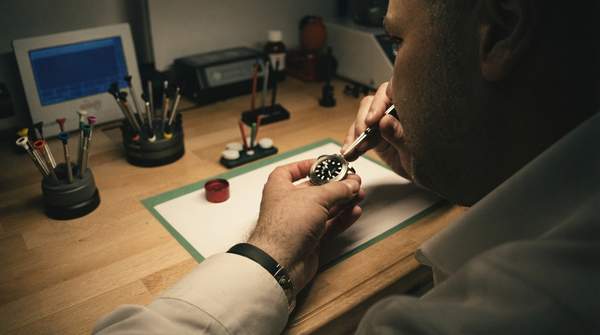
With the gouaché as guide and stones in hand, the physical jewel takes shape. A model is constructed in wax or metal, the metal structure is crafted, and each gemstone is set—work performed by a chain of specialists whose roles the design painting coordinates. This is where the division of artisanal labor becomes visible: mock-up makers, jewelers, gemologists, and stone setters each contribute expertise the previous stage anticipated.
The critical processes at this stage—stone setting, assembly, and finishing—remain manual, as the jeweler Roman Malakov's craftsmanship guide observes, requiring experience and judgment that machines cannot replicate. Craftsmanship here is not decorative but functional: well-crafted pieces maintain secure settings, stable structures, and refined finishes over time, reducing the need for frequent repairs and supporting long-term wearability. These manual skills are essential to creating the extraordinary pieces that define the category.
Stage 4: Finishing and Polishing – The Pursuit of Perfection
The final stage is refinement, and it is where the time investment of haute joaillerie becomes most concentrated. Sotheby's notes that the finishing and polishing of high jewelry are far superior to those of mass-market fine jewelry, with each piece often requiring hundreds of hours of skilled labor. This stage ensures the piece's exceptional quality and refinement—the seamless surfaces and precise settings that mark a work of art rather than a manufactured product.
Time, in this model, is not a cost to be minimized but a component of value. DORUZOVA's guide illustrates the principle at the artisan scale: a simple handmade ring might take four to eight hours, while a complex piece could take twenty, forty, or more than a hundred hours—an investment reflected in price and one reason artisan jewelry costs more than mass-produced alternatives. An artisan, the guide adds, cannot rush through any stage without compromising the quality of the final piece. High jewelry extends that logic by an order of magnitude.
Distinguishing High Jewelry: Beyond the Price Tag
Three differentiators define the category against both mass-produced and standard fine jewelry. First, material rarity: high jewelry uses the rarest and most precious gemstones and metals, where mass production often substitutes plated metals and synthetic stones. Second, uniqueness: high jewelry pieces are bespoke or produced in extremely limited numbers—each one individual—whereas factory production yields identical copies in high volume. Third, labor: hundreds of hours of skilled artisanal work, concentrated in manual fabrication, setting, and finishing, versus machine-manufactured assembly.
These attributes compound rather than add. Rarity of materials limits what can be made; uniqueness of design ensures no substitute exists; and the extensive time investment and artisanal skill contribute significantly to the piece's higher cost and long-term value. A collector who understands this compounding can articulate what makes a piece "high jewelry" in terms of verifiable substance, not price or brand alone.
Appreciating Haute Joaillerie: A Collector's Framework
Collectors and enthusiasts should assess high jewelry pieces by recognizing the intricate, multi-stage artisanal process, the rarity of materials, and the extensive skilled labor invested, rather than solely by aesthetic appeal or brand. The four-stage model makes each contribution traceable: the gouaché evidences a unique conception, the stones evidence rarity that cannot be repeated, and the settings and surfaces evidence hands rather than machines.
The measurable indicator to look for is the presence of unique design elements, exceptional gemstone quality, and superior, seamless finishing that indicates hundreds of hours of manual craftsmanship. A piece that satisfies those three observations carries the documented drivers of haute joaillerie's intrinsic worth; one that does not, however beautiful, belongs to a different category of jewelry.
Sources
- Complete Guide to Collecting High Jewelry or Haute Joaillerie — Sothebys.com
- Designer, the origin of the creation - Van Cleef & Arpels — Vancleefarpels
- The Gouaché in High Jewelry 1: The Light (3 hrs)-Savoir-faire — Lecolevancleefarpels
- Prestigeonline
- What Is Artisan Jewelry? A Full Guide — DORUZOVA
- Jewelry Craftsmanship: The Art, Skill, and Tradition Behind Fine Jewel — Roman Malakov